
The Growing Challenge of Infrastructure Maintenance in India
Contracts vs Ground Realities
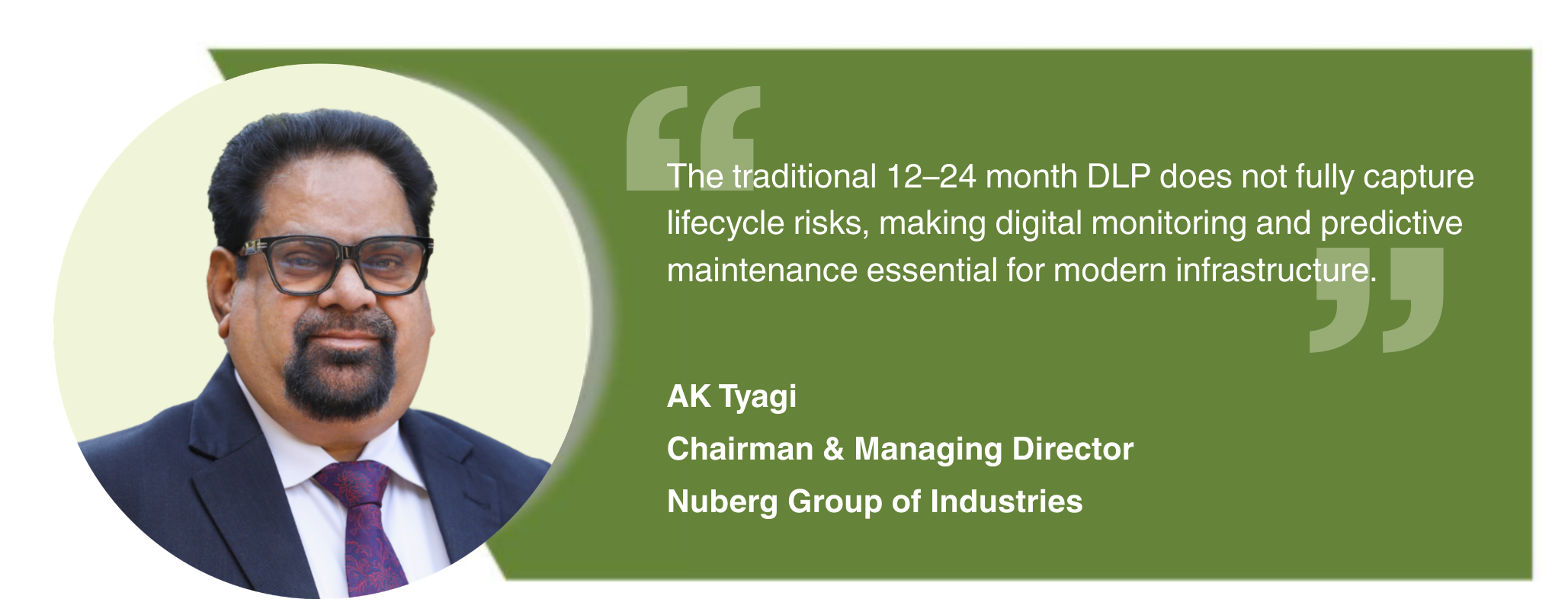
Indian construction contracts present robust maintenance provisions on paper, yet the reality across high-load infrastructure reveals persistent gaps in lifecycle performance and accountability. A 12-24 month DLP is too short to capture structural fatigue, environmental stress, or long-term performance issues. These clauses, derived from FIDIC and government templates, often lack clarity on lifecycle responsibilities and do not reflect actual operational demands.
The dominance of L1 tendering weakens maintenance obligations from the start. Contracts seldom allocate sustained funding, leading to bureaucratic delays, weak monitoring, and slow enforcement. Disputes over defects are common, while material quality issues and limited upkeep capacity contribute to premature deterioration.
India needs contract mechanisms that embed lifecycle testing, measurable benchmarks, and continuous digital monitoring instead of depending solely on DLP-based obligations.
Under-Budgeting Maintenance is a Major Concern
Under-budgeting for maintenance is widespread. Despite large allocations, the share for maintenance remains below 5 percent of project costs, whereas mature markets typically allocate 8-12 percent annually. This reflects India's bias toward new construction while preventive upkeep remains an afterthought.
Without adequate funds, essential activities like structural health monitoring, corrosion control, and drainage upkeep get delayed. Assets deteriorate faster and require costly emergency interventions.
In EPC and PPP contracts, 0&M responsibilities are often underestimated, widening the maintenance gap. Dedicated budgets, lifecycle cost accounting, and incentives for long-term asset management are essential. Unless India mandates ringfenced maintenance funding, deterioration will continue to outpace construction.
Weak Oversight and Data Gaps Drive Infrastructure Maintenance Risks
The maintenance phase reveals major accountability gaps among authorities, contractors, operators, and independent engineers due to unclear responsibilities and limited data-driven oversight. Heavy reliance on contractor self-reporting and infrequent inspections allows deviations from specifications, while operators often underreport issues to avoid disruptions. Independent engineers typically lack enforcement authority, leaving defects unresolved and lifecycle costs rising.
For large assets, digital tools such as sensors, SHM systems, drones, and digital twins enable predictive maintenance and early fault detection. loT, big data, and Al based monitoring can track asset behaviour continuously, while open APIs support interoperability across platforms. Yet high upfront costs, skill gaps, and cybersecurity concerns continue to slow adoption. After commissioning, fading contractor involvement further weakens accountability, underscoring the need for digital tracking, joint audits, and clearly defined post-handover responsibilities.
Reforms for Lifecycle-Centric Infrastructure
India’s infrastructure ambitions will remain incomplete unless maintenance is embedded from concept to commissioning. Moving beyond L1-driven procurement toward lifecycle-centric contracting, backed by digital monitoring, predictive maintenance, and ring- fenced funding, is no longer optional — it is foundational.
Embedding BIM, digital twins, and AI-enabled asset intelligence within Detailed Project Reports will shift infrastructure from reactive upkeep to performance-driven management. Procurement reforms such as QCBS, stronger post-handover accountability, and measurable lifecycle benchmarks must become standard practice.
Ultimately, infrastructure competitiveness will be defined not by how fast assets are built, but by how reliably they perform over decades. Lifecycle-centric execution will be critical to building infrastructure that is resilient, efficient, and sustainably managed — strengthening asset longevity, investor confidence, and the long-term credibility of the EPC sector.
© This article was first published in NBM&CW, March 2026.
